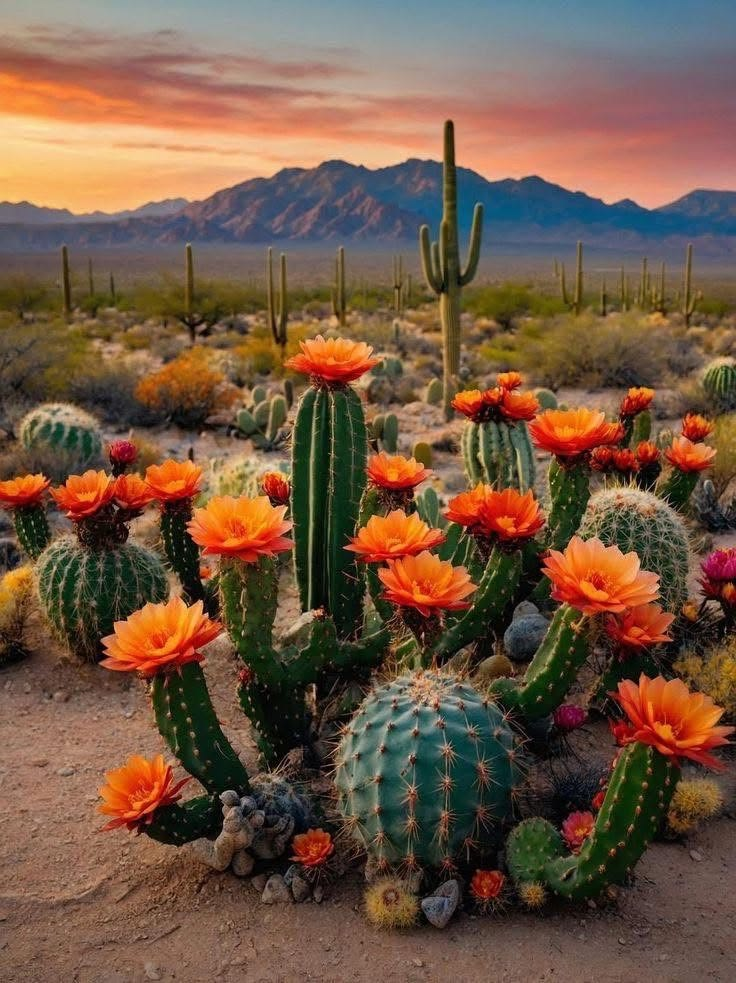

The History of Water Dams and Desert Development in Arizona
Arizona is an arid state where precipitation is rare and river flow is unstable. Since the early times, water has been of primary importance for the residents of Arizona because rainfall is scarce and the soil is mostly desert. Long before Arizona was declared a state, Native peoples constructed canals to irrigate fields from rivers and thus survive in arid conditions.
Desert Development in Arizona
At the end of the 19th century, more settlers arrived to Arizona, and population grew. Larger cities appeared, agriculture developed. In addition, people started to need more water not only for irrigation but also for their households. The existing small canals and wells were not enough. Therefore, the leaders of Arizona started planning big dams. Water could be held in a reservoir by a dam; it would help to overcome drought months and provide sufficient supply of water.
Roosevelt Dam was one of the first dams ever planned and constructed in Arizona. It was under construction since the beginning of the 20th century on the Salt River. It was completed in 1911. This dam stored much water and was beneficial for the development of agriculture in the central part of Arizona. In addition, it contributed to the development of Phoenix and other towns. It provided sufficient water supply which allowed for expansion of the agricultural lands and urban development.
#1
#2
#3
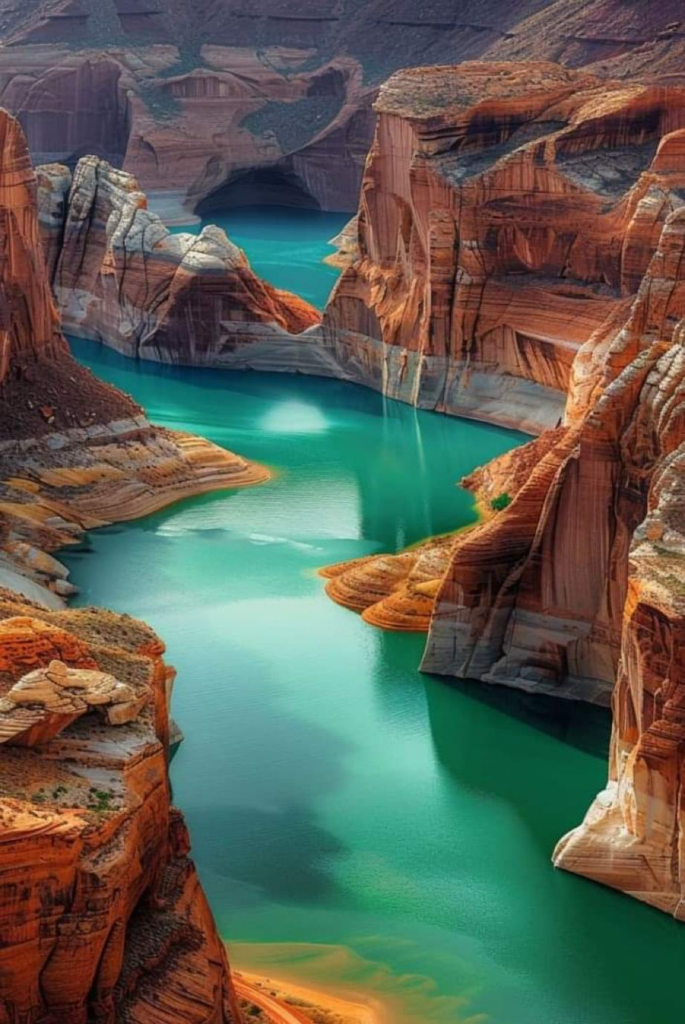
The further constructions of dams on the Salt and Verde rivers formed the extensive system of water reservoirs in the central part of Arizona. Such dams stored water during winter snows and rains and stabilized water supply. Electric energy of dams was useful for households, agriculture, industries, and public utilities.
#4
#5
#6
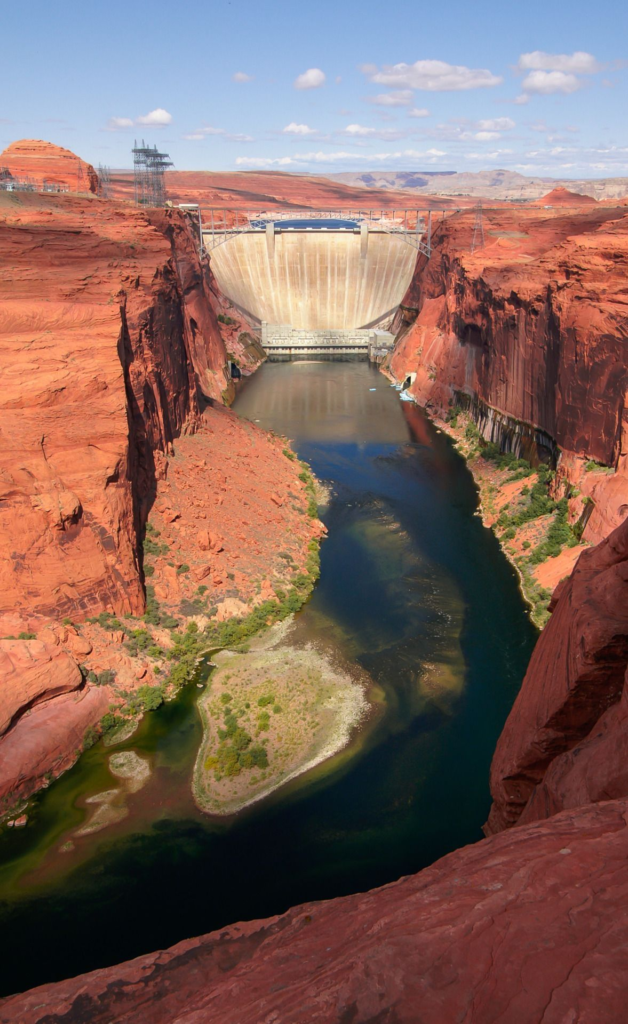
Construction of Hoover Dam on the Colorado River started in 1936. As a result, the region got a powerful source of water and electricity. Arizona received a share of the water and the electricity produced by the dam. Thanks to these resources, the region experienced an expansion of its cities and industries. In addition, the construction made it possible to carry out large-scale construction projects in the area.
#7
#8

#9
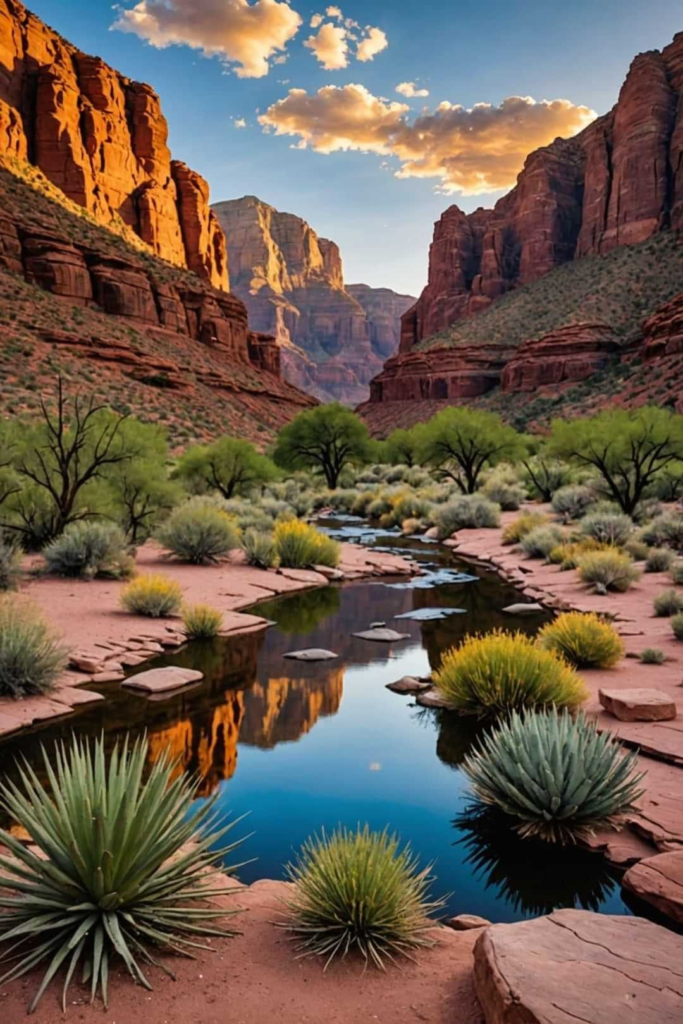
With the increase of population in Arizona, the need for water sharply increased. Cities used groundwater, which was taken from wells. Over time, an intensive withdrawal of water led to a decrease in the level of water and even subsidence of the territory. To ensure protection of underground resources, new water laws were developed.
#10
#11
#12

#13
#14

To deliver Colorado River water to central and southern Arizona, the Central Arizona Project was constructed. This project includes a complex of channels, water-lifting stations, and reservoirs. In the 1980s, delivery of water to central Arizona started. Thus, people got one more source of water, which decreased the pressure on underground water sources.
#15
#16

#17

#18

Influence of dams and canals on the region was significant. First, they contributed to the growth of cities and development of agriculture in Arizona. Second, they provided electricity for millions of people. However, canals and dams significantly transformed the rivers, wildlife areas, and lands of Native Americans. At the current time, the state experiences new water challenges due to growing population, lengthy droughts, and warming climate. Nowadays, Arizona needs to take care of its water resources. The example of Arizona shows that the careful water management is important.
#19
#20